For Owners Doing $500K–$50M
Two days. We rebuild your company around AI so it scales while you step out of the middle of it.
In Person · Brisbane · Aug 31 + Sep 1
Book a 20-minute call · founding cohort
AI First Foundations is a 2-day, in-person workshop in Brisbane (August 31 + September 1) for established owners — you plus one operator each. We take your actual business apart on the whiteboard and rebuild it around what AI can do today.
The goal is one number: drive your Owner Dependency as close to zero as possible — so the business runs and scales without you holding the centre together with both hands.
You leave with a 90-day plan. And you keep the Operator's Beta™ software that measures the number live and keeps score for the 12 weeks after — a two-minute weekly check-in re-scores your beta as the work lands.
Not notes. A build spec and a dated plan — what to delete, what to automate, what to rebuild, and who owns each.
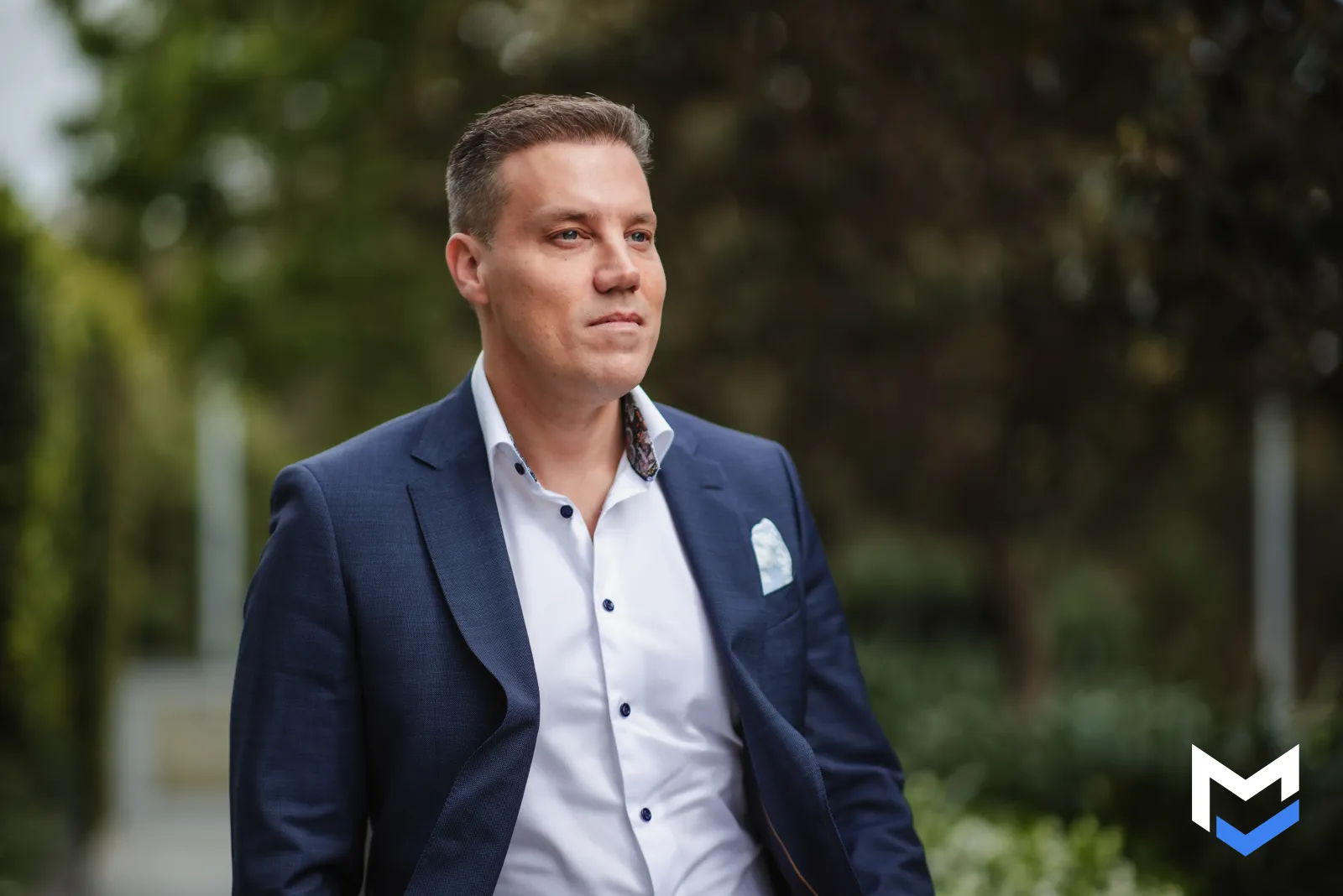
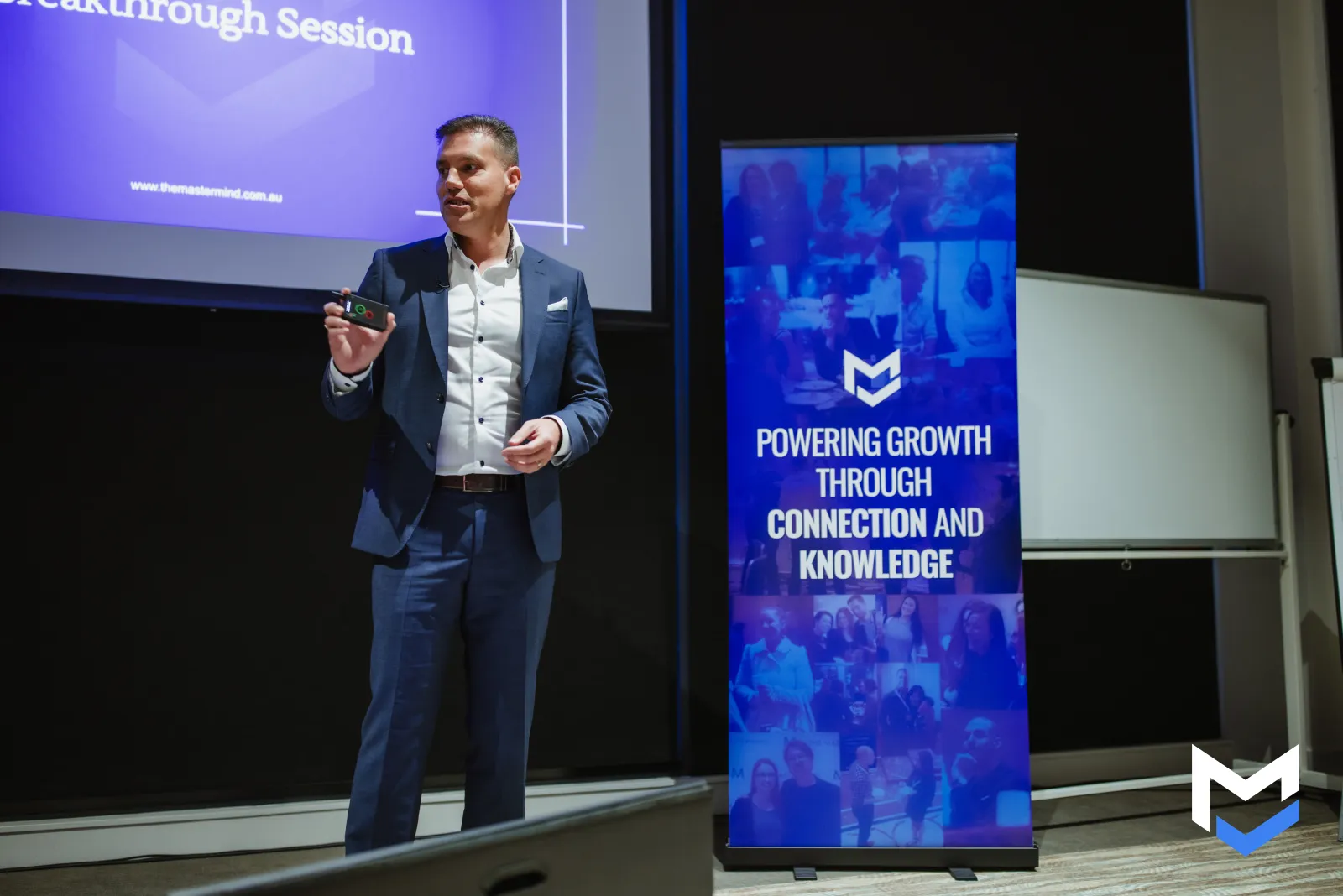
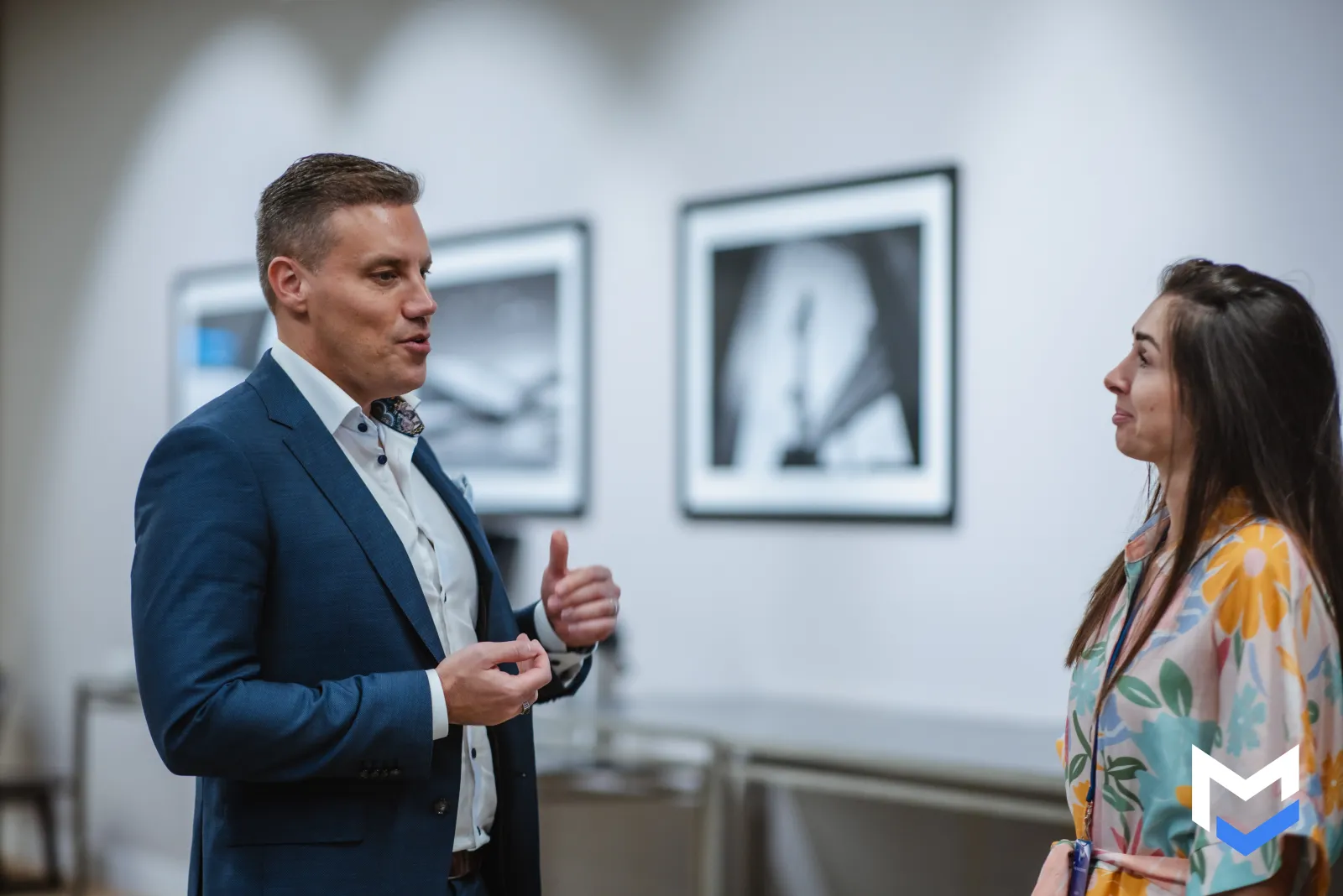
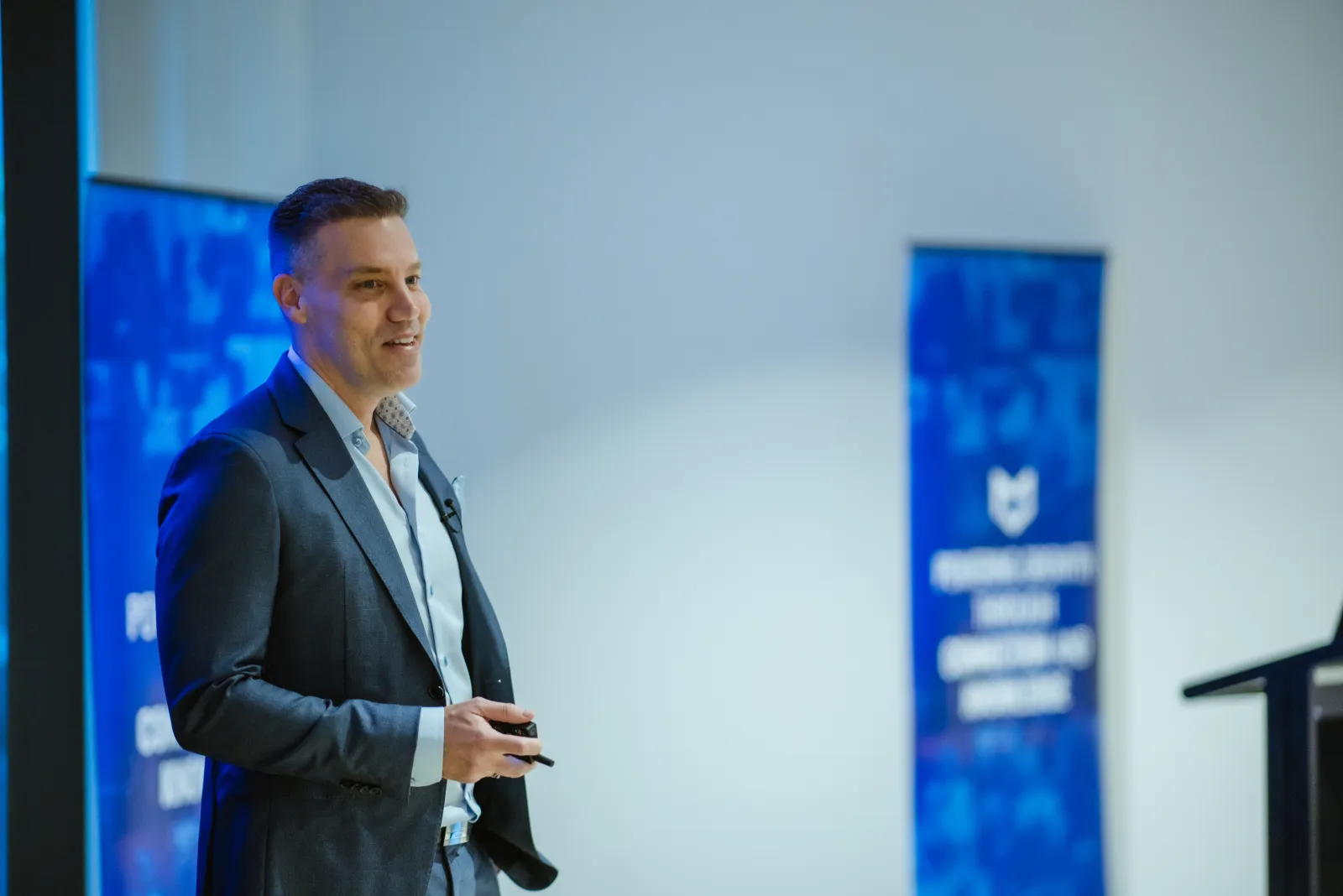
I build production-grade AI systems. I also run real businesses. The workshop is what happens when those two rooms are the same room.

Do the work — run your snapshot, take the moves your 90-day plan gives you, and do the two-minute weekly check-in inside the software. Follow the system for 12 weeks and your dependence on the business, and the hours it needs from you, will measurably fall.
If you do the work and those numbers haven't dropped by week 12, email us with your record and we refund your investment in full. The only condition is that you actually followed it.
The risk is on us. The measurement is on your screen.
Founders on what changed. In their own words.
Tell us about your business — we'll set up a quick call to see if it's a fit.
Ben
P.S. Your business can't scale past you — not because you're not good enough, but because it was built to depend on you, and nobody told you that dependency was the ceiling. Two days is how we start breaking it.
For Owners Doing $500K–$50M
Two days. We rebuild your company around AI so it scales while you step out of the middle of it.
In Person · Brisbane · Aug 31 + Sep 1
Let's TalkFounding cohort · just a conversation
The rest of this page asks you to rethink how your business is built. It's fair you know who's making the argument.
I build production-grade AI systems. I also run real businesses. The workshop is what happens when those two rooms are the same room.
Do the work — run your snapshot, take the moves your 90-day plan gives you, and do the two-minute weekly check-in inside the software. Follow the system for 12 weeks and your dependence on the business, and the hours it needs from you, will measurably fall. Your own dashboard is the judge.
If you do the work and those numbers haven't dropped by week 12, email us with your record and we refund your investment in full. The only condition is that you actually followed it — the system cannot move a number you never touched.
The risk is on us. The measurement is on your screen.
Product-market fit. Systems. Sales. Leadership. You could fill a book about growing a business.
So why isn't it 10x bigger? Not "grown." Scaled.
Here's the test. Picture next Monday. 10x the orders. 10x the inquiries. 10x the work hitting your team's desks.
Could the business absorb it — deliver without you holding the centre together with both hands?
For almost every owner doing $1M, $5M, $10M, even $25M, the honest answer is: the wheels come off in week one.
That's not a capacity problem. It's an architecture problem.
You built something that scales with your hours. Then you ran out of hours. Then you hired people and discovered it now scales with your management of other people's hours. The constraint moved. The dependency didn't.
Owner-dependency is the ceiling. Not the market. Not the offer. Not the team. You. The business's structural dependency on you is the binding constraint on everything else.
Same markets. Same access to capital. Same calibre of operator. Wildly different outcomes. Across years of working with owners at every scale, the variable was never strategy, grit, or talent.
It was a single structural property: how much of the business required the owner to function.
As an engineer, if I can't measure it, I can't move it. So I built a number for it.
| β Reading | What It Means |
|---|---|
| ≈ 0 | Business runs independent of you |
| ≈ 0.5 | You are roughly half the engine |
| → 1 | Output tracks your personal involvement directly |
| > 1 | Output collapses faster than you withdraw |
And here's what surprises people: beta isn't one number. It's two.
Effort Beta (βE): how much of the total human work runs on you personally. Your load.
Presence Beta (βP): how much of that work must happen live. Real-time. On calls. "Only I can decide this right now."
Two owners carry the same workload. One disappears for a month and nothing slows down. The other can't take Wednesday afternoon without three Slack pings. Same effort. Opposite freedom.
Both numbers go on the whiteboard on Day 1.
You cannot scale exponentially when your beta is locked above a specific threshold.
Not with more capital. Not with a stronger team. Not with longer hours. Not with better tools. Above that threshold, the math doesn't bend.
Freedom wants near-zero beta because time is finite, non-renewable, and the only resource you can't buy back. Scale requires near-zero beta because human hours are capped and cannot multiply. Both roads converge on the same structural redesign.
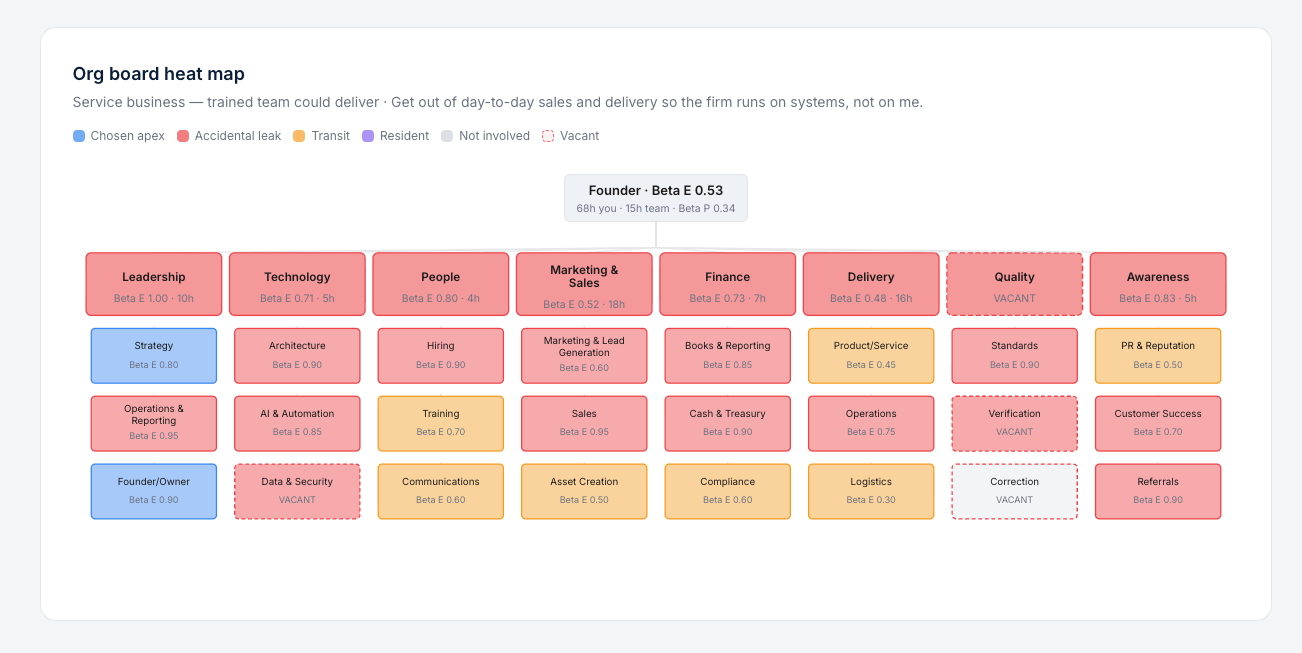
Week 0: 68 founder-hours a week. The business runs on you.
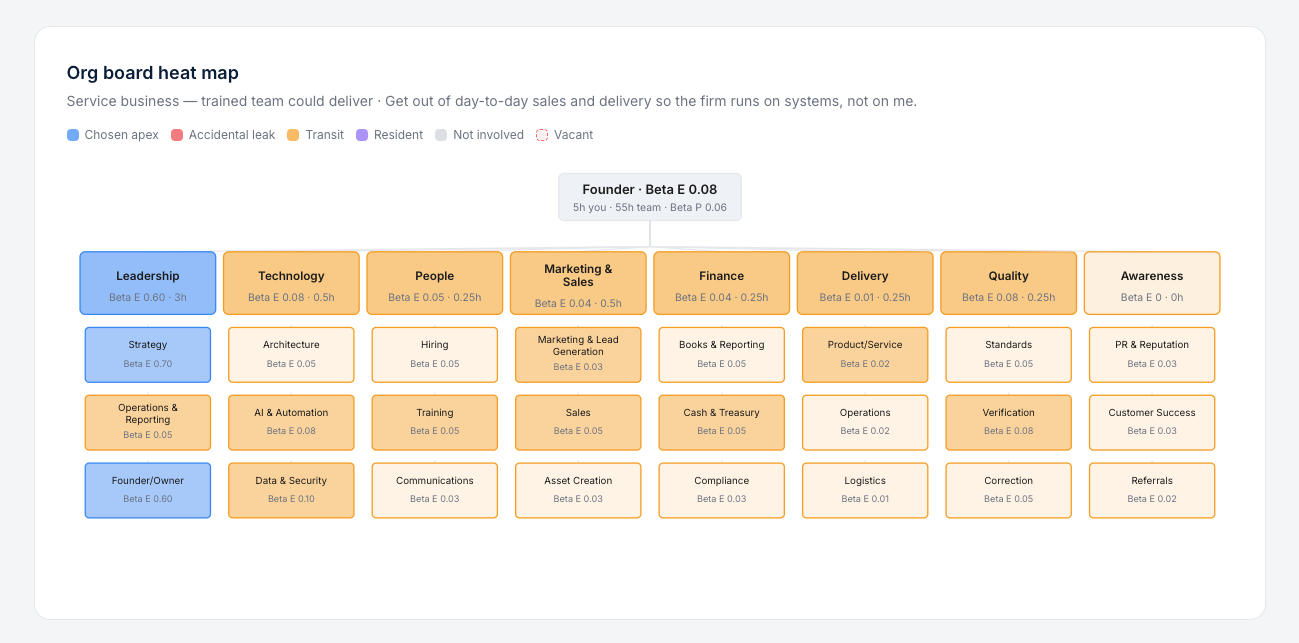
Week 12: 5 hours. It runs without you in the middle.
Owner-dependency has always been the ceiling. What's new is that for the first time in history, the tools exist to dismantle it without $50M in venture capital.
Before AI, reducing owner-dependency meant one thing: people. Hire an ops manager. Hire a GM. Staff your way out.
That worked if you had the margins. Most owners doing $500K to $10M don't. They're stuck in the gap between "too much work for me" and "not enough margin to hire the team that replaces me."
AI collapsed that gap.
This isn't about productivity. Productivity is a team-level metric. This is about dependency — the structural question of what still requires you.
Retrofitters bolt AI onto the existing business. ChatGPT for content. Zapier for reminders. Copilot for dev. The org chart stays the same. The offer stays the same. Beta hasn't moved a decimal point.
AI-First Builders asked a different question: If I were starting this company today, knowing what AI can do, what would I build?
Then they built that.
The test: if you removed every AI tool from your business tomorrow, would it still operate in basically the same shape? If yes, you're a retrofitter. The AI is cosmetic, not structural.
AI, as pitched to owners, is a productivity tool. Faster emails. Faster content. Faster reports. That's the right frame for your team.
But productivity is not the founder's job. The founder's job is to design the system that produces the work without them in the middle of it. Productivity tools don't touch that.
A faster wheel doesn't free the hamster. It just spins harder.
The AI that changes a founder's week isn't productivity AI. It's architecture AI. Same tools. Different question. Different outcome entirely.
We take your business apart on paper. Area by area. Team. Offer. Delivery. Marketing. Sales. Operations.
For each one, the same question: Would I build it this way if I started today?
First pass, everyone's generous. Yeah, that's mostly fine. Second pass is where the real answers live.
You leave with three lists: Keep. Redesign. Eliminate. And the sequence you move through them is the whole game:
Every task earns its way down that ladder. Most beta-reduction fails because the owner skipped elimination and automated something that should have been killed. You don't speed up what shouldn't exist.
Measure your beta, both axes, live on your actual business. Run area-by-area on each company in the room. Score your team seats on three pillars: self-management, reliability, initiative. Find the wrapper-systems you've built around weak hires and stopped seeing.
Tech stack audit. Every load-bearing tool: keep, redesign, replace, rebuild. The path decision: full model rebuild AI-first, or start with one department. Build spec drafted, then the 90-day plan. Public commitment in front of the other founders. The act, the owner, the date. Your beta tracked live in the software as the work lands.
Your own business, diagnosed. With an architecture for the version that scales without you in the centre of it.
The workshop sets the plan. Then you run it, with the software keeping score: the two-minute weekly check-in re-scores your beta as the work lands, so the number stays honest instead of drifting. Here's what the curve typically looks like.
Week 0 is when you walk in. Week 12 is when you become the case study.
Your seat includes you plus one team member. Pick the operator whose name will be on the 90-day plan. Ops lead. Sales lead. Delivery lead. Whoever runs the department you're redesigning first.
They helped build the plan. They own the plan. Don't walk back to a team that wasn't in the room and spend the next month re-selling a framework they didn't experience.
Founders on what changed. In their own words.
This is the founding cohort. You become a named case study at week 12: beta-before, beta-after, one shipped install. Apply below and we'll talk to make sure it's the right fit, both ways.
Tell us about your business and what you're looking to change.
To make sure the room is the right fit.
20 minutes to discuss your business.
We lock your seat and send everything you need.
Applying doesn't commit you to anything.
Two quick steps, then a call to see if it's a fit.
Ben
P.S. Your business can't scale past you. Not because you're not good enough. Because it was built to depend on you, and nobody told you that dependency was the ceiling. The whole goal of these two days is to drive your Owner Dependency as close to zero as possible. That's what breaks the ceiling.
P.P.S. Skip-to-the-end version. Two days. Brisbane, August 31 + September 1. You + one operator. Walk out with: beta on both axes, three lists, build spec, 90-day plan, one public commitment. Founding cohort, applications close once it's full.